Why Novi homeowners call for a consultation
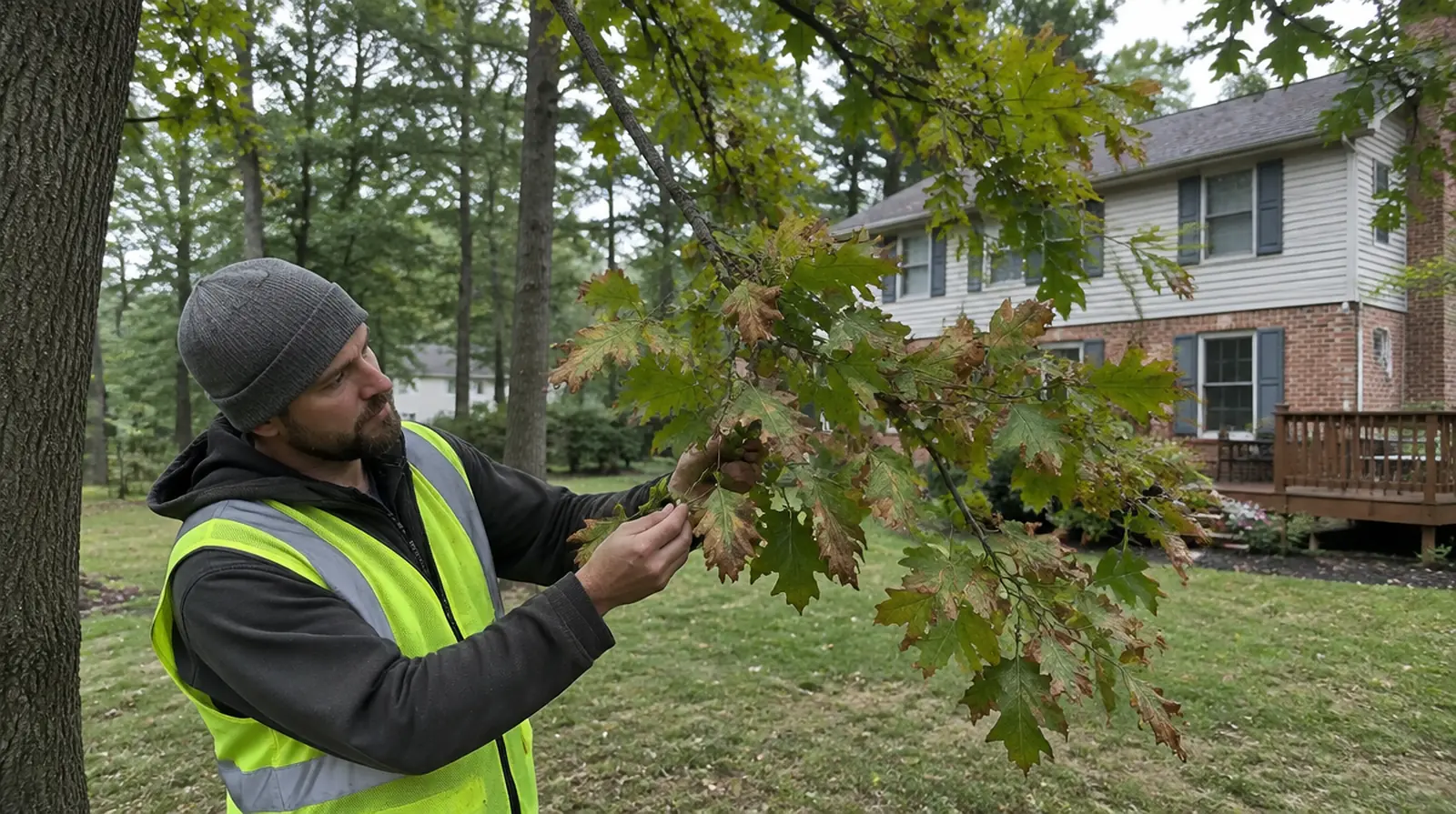
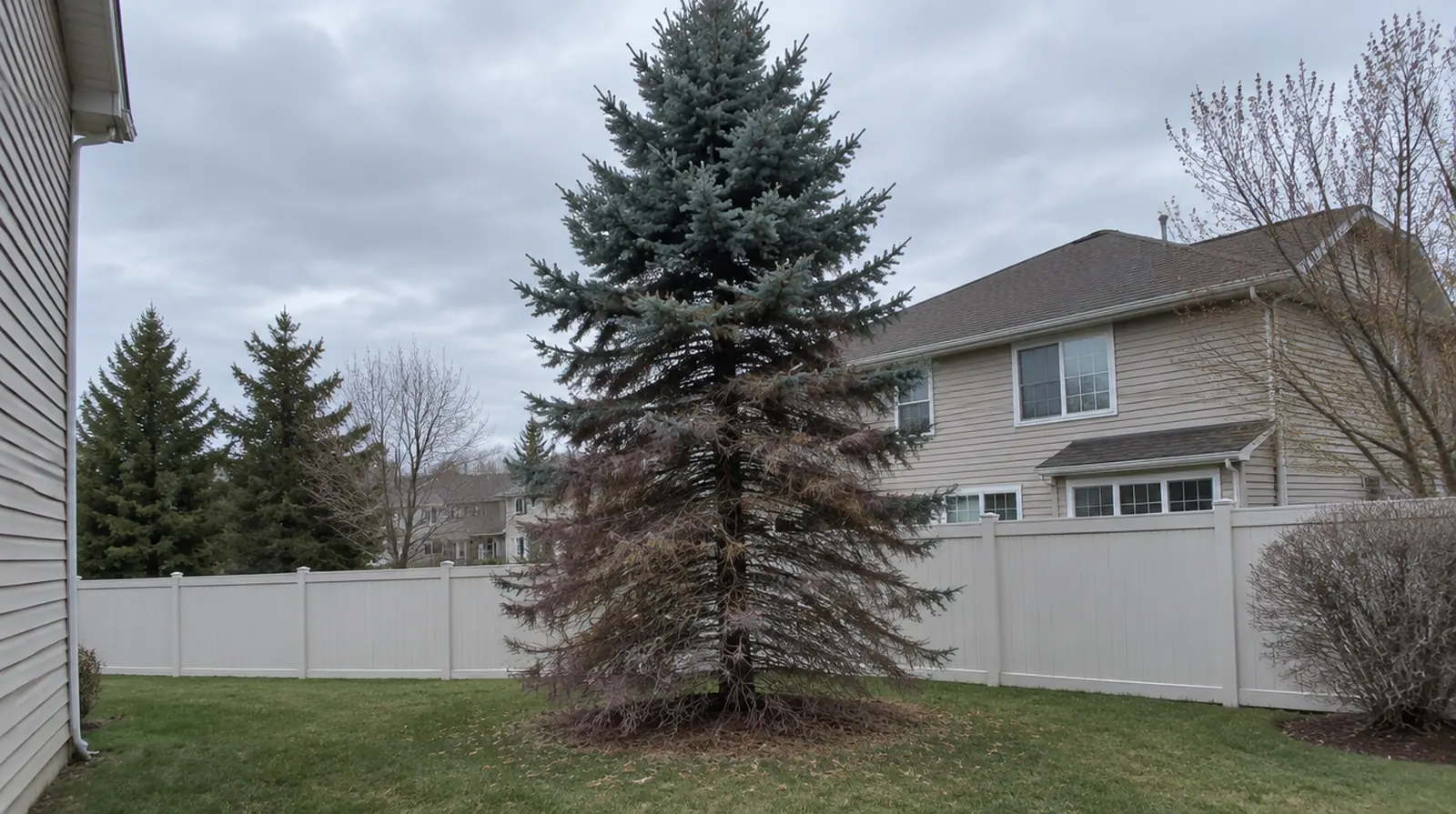
We get calls about trees that look wrong but are still standing. A maple dropping leaves in August. An oak that browned out in a week. A row of spruce along the back fence that has gone bare from the bottom up. A huge tree that leans toward the house after a summer storm. In each case the owner wants to know whether to treat, trim, remove, or wait. A consultation answers that question before money is spent in the wrong place.
We also do pre-construction visits for decks, pools, additions and driveway widening, and for buyers who want a realistic view of the trees on a property before closing.
How the visit works
We walk the property with you and look at each tree you are concerned about, plus any others that stand out. We look at the crown, the trunk, the root zone and the site around it: grade changes, soil compaction, standing water, construction scars and mower damage. Where it helps, we use a mallet to sound for hollow areas, a probe to check decay, and binoculars to look at high unions. Then we talk through what we see and put the main points in writing for you.
Problems we see often in Novi
Oak wilt. Red oaks can die within weeks once oak wilt is present, and the disease can move to neighboring oaks through grafted roots. It is spread by beetles drawn to fresh wounds, so Michigan guidance is to avoid pruning or wounding oaks from roughly mid-April to mid-July. If an oak suddenly wilts and drops leaves in early summer, call before you cut.
Spruce decline. Colorado blue spruce planted around subdivisions in the 1980s and 1990s often suffer from needle cast diseases, cankers and stress in heavy clay soil. They lose needles from the bottom up. Some can be helped. Many are past the point where treatment pays off.
Beech leaf disease. This newer problem has reached southeast Michigan. Look for dark bands between the veins of beech leaves. Woodlots with native beech are worth watching.
Life after ash. Emerald ash borer was first found near Detroit in 2002 and killed most of the ash trees in the region. Many Novi yards still have standing dead ash at the back of the lot, and those trunks get brittle and dangerous. We also check which trees replaced the ash and whether they are suited to the spot.
Heavy clay and wet ground. Glacial clay holds water in spring and bakes hard in late summer. Shallow roots, lifted root plates and poor growth often trace back to drainage, not disease.
Novi's woodland and tree rules
Novi takes its trees seriously. Under the city's woodland protection rules, removing trees of 8 inches in diameter or larger within a regulated woodland generally needs a Woodland Use Permit, and trees 36 inches or larger are protected wherever they grow. Historic and specimen trees have their own protections. Many backyards in subdivisions near Walled Lake, Island Lake and the wooded areas around Twelve Oaks fall inside regulated woodland boundaries without the owner knowing it.
During a consultation we flag trees that may fall under those rules so you can check with the city before any work. Replacement plantings or fees can apply, so it is far better to know in advance.
After the consultation
You might need nothing. You might need watering and mulching advice. Or the right step may be careful tree trimming to remove dead wood and lighten a heavy limb, or tree removal for a tree that has become a hazard. If a lot needs a bigger cleanup of dead ash and brush, our land clearing page covers that. The choice is yours, and there is no pressure to book follow-up work with us.
We work across Novi and nearby Northville, Wixom, Walled Lake, Commerce and Farmington Hills.
Questions
Can a sick oak be saved?
With oak wilt, red oaks rarely recover, but quick action can protect nearby oaks. White oaks handle the disease better. Other decline problems are often more treatable.
What is the best time of year for a consultation?
Summer shows leaf problems best, and winter shows structure best. Any time is fine to start.
Have a tree you are unsure about?
Call (947) 223-2431 to schedule a consultation. Let us know the species if you know it, and send a photo if you can.